
Welcome to In the Weeds, a new publication covering the business of independent restaurants.
I’m back with part three of the “Under New Ownership” series. Opening a new restaurant is hard, but what about taking over a restaurant that’s already operating? It’s complicated. I spoke to three restaurant owners about the process of buying and operating an established restaurant. (Read part one, “How Marc Forgione Made Peasant His Own” and part two, “The Regulars Came With the Restaurant.”)
There’s been a recent uptick in available restaurants to purchase, We Sell Restaurants told me, thanks in part to factors like demographic shifts. The business broker said one of the benefits to buying an established restaurant is the established customers, reputation, staff, and equipment. Jimmy Stockwell, whose story is below, bet on those established customers, reputation, staff, and equipment when he took ownership of three restaurant brands in Athens, Ohio, earlier this year.
Also in this edition: How free restaurant bread actually works, when unreasonable hospitality becomes unreasonable, and OpenTable’s renewed focus on the paying customer (i.e., restaurants).
If this email was forwarded to you, you can subscribe here.

Jimmy Stockwell
When I sat down to speak to Jimmy Stockwell a few days after taking over Village Bakery and Cafe in Athens, Ohio, we discussed the responsibility of a restaurant, particularly in this moment.
“Right now, there is definitely a fragile environment for independent restaurants,” he told me in February. Still, he believes “it’s our personal responsibility to make the things that we want to see in the world. So that might be literally making the restaurant that you want or the beer.”
Jimmy started with beer. In 2015, he co-founded Little Fish, a brewery in Athens, home to Ohio University and where I’ve lived for the past five years. The brewery was made to be “a space that we wanted to go to. At the time, all of the bars really were geared towards college students.” When they added the restaurant space a few years later, they focused on supporting local farms and the local economy. “This being an impoverished area, [the goal was] really just trying to bring that economic network closer and closer between the farms and the end user.”
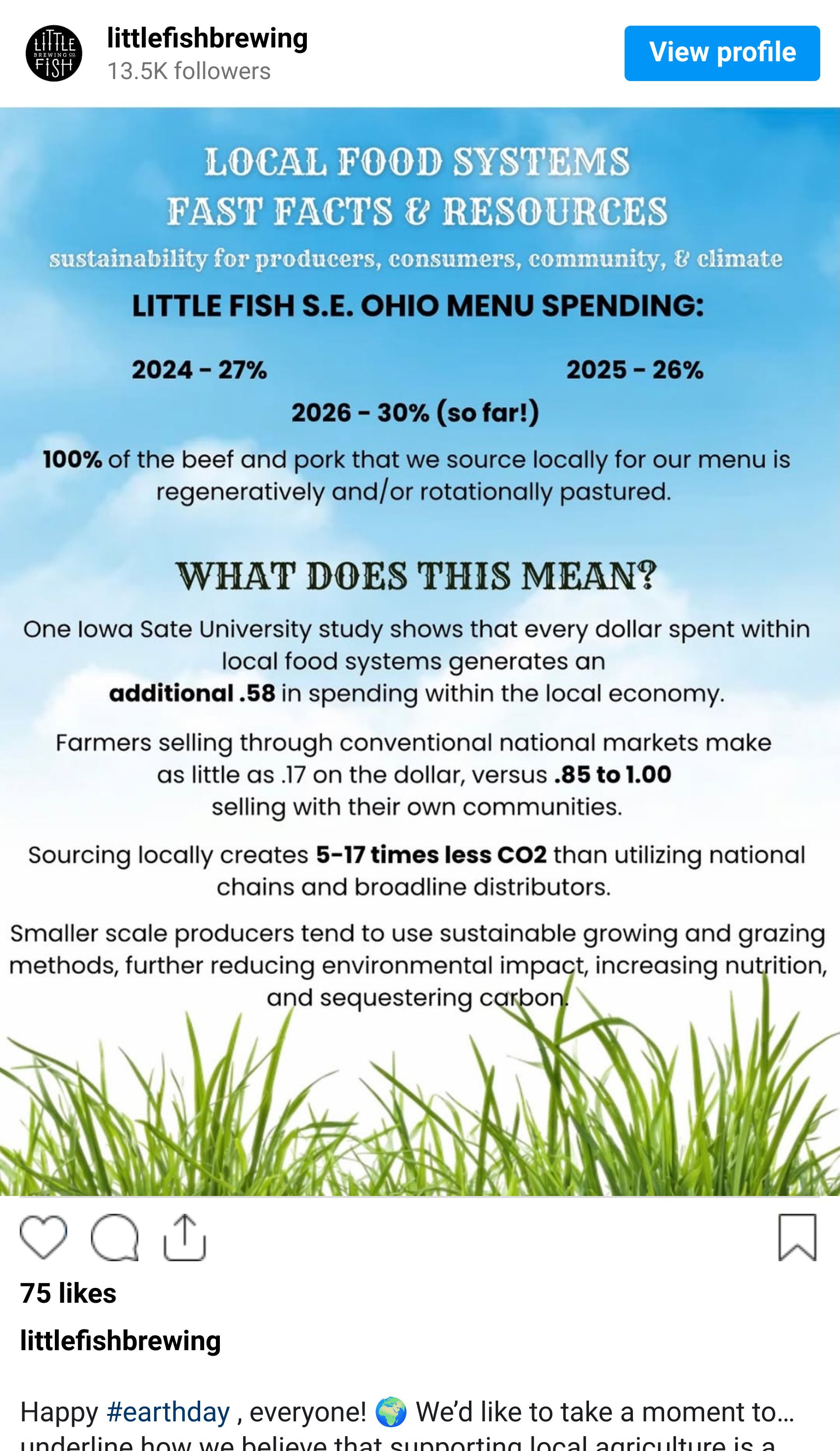
When he learned the original owners of Village Bakery and Cafe were planning to wind down operations, Jimmy thought he could expand his support for the local economic network, he said. Operating another restaurant would be difficult, he reasoned, but building some economies of scale would help make those thin restaurant margins work.
The deal actually came with three brands—in addition to Village Bakery and Cafe, there’s Della Zona, a wood-fire pizza spot that was housed next door, and Catalyst Cafe, a coffee shop. Both restaurants closed years ago, but much of the equipment, infrastructure, and patrons' fond memories live on. The deal will eventually include the real estate, “which will give me some financial stability in the future,” Jimmy said. With the three brands, Jimmy created Appalachian Hospitality Group. “The idea is that eventually we'll have those three businesses operated in our business philosophy mindset.”
(He kept the operation separate from Little Fish but is working with the brewery’s chef, Jen Sartwell.)
He believes it’s important to keep beloved restaurants going, or, in the case of Della Zona and Catalyst Cafe, restart those restaurants, and he thinks there’s more opportunities today to do so.
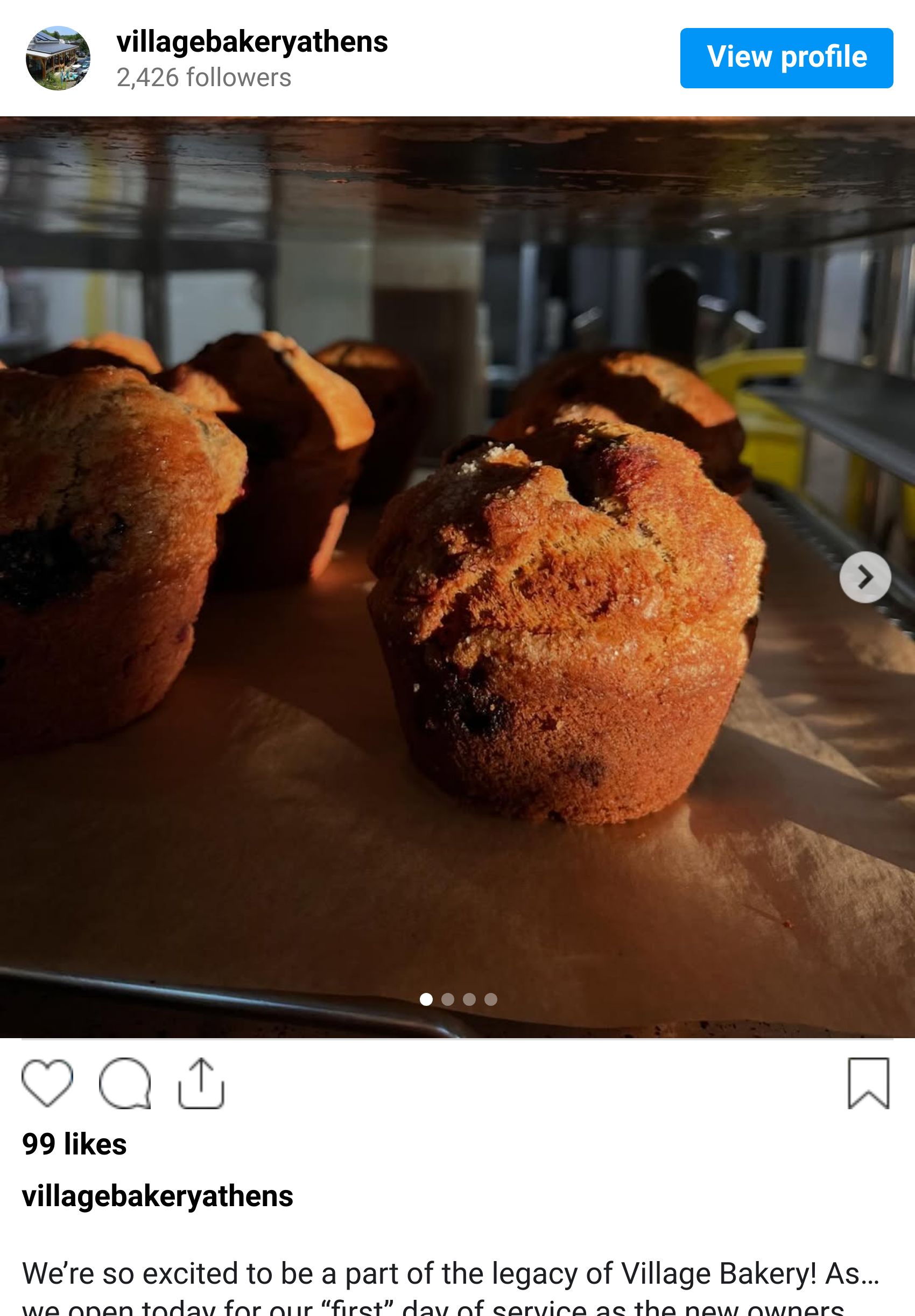
“As far as independent restaurants in general go, I really feel like there’s a period of opportunities that are similar [to mine], he said. “There are certain restaurateurs or groups that are aging out of their restaurants, and I would like to see more of those restaurants continue … your business just doesn’t end when you’re done with it; it continues.”
At Village Bakery and Cafe, the restaurant continues, with some tweaks. Jimmy immediately extended the hours, slowly added in new dishes, and he’s been able to learn how the place operates on the business’s strong foundation.
“On the financial side, knowing the numbers going into it was really nice. Also, there’s a built-in clientele,” he said. “It was just a really good opportunity to get experience running something that, workflow-wise, is very different from Little Fish. This is a morning and lunch spot, and Little Fish is very much, like, a dinner spot or a hangout spot on the weekends … It is just a very different business. There’s a lot of walk-ins here where there’s a lot of driving into Little Fish, and getting that experience for my own personal growth was interesting.”
The next learning experience will come from getting Della Zona, the wood-fired pizza restaurant, up and running.
When I caught up with Jimmy in April, he was figuring out the restaurant’s layout, what reservation system they’ll use, and how to make the tile floor less of an issue for table wobbles.
He’s planning to offer comment cards to elicit feedback to figure out what sort of restaurant the community is craving. “If people have that outlet, they wouldn’t go to Yelp,” he hopes. He’s been starting his day at Little Fish and heading over to Village Bakery and Della Zona in the afternoon, fixing or installing whatever needs to be done— the internet, the HVAC, the bakery scale. He’s planning pop-ups at Della Zona starting in June.
Why open another restaurant so soon? He wants to keep the momentum going for himself and for Appalachian Hospitality Group. Plus: “All I know how to do is brute force,” he said. He tells himself, “Hopefully, after the main projects are up and running, things will slow down.” But “it’s all part of the transition” of owning a restaurant group.
Thank you, Jimmy, for sharing your story.
Side Dishes:
In just a few bullet points, Chef Matt Adler at Caruso's Grocery and Cucina Mornini in DC breaks down how “free” bread really works on Axios. It’s a good companion piece (or alternative) to the 10,000+ words on the search for the best “free” bread from the Atlantic.
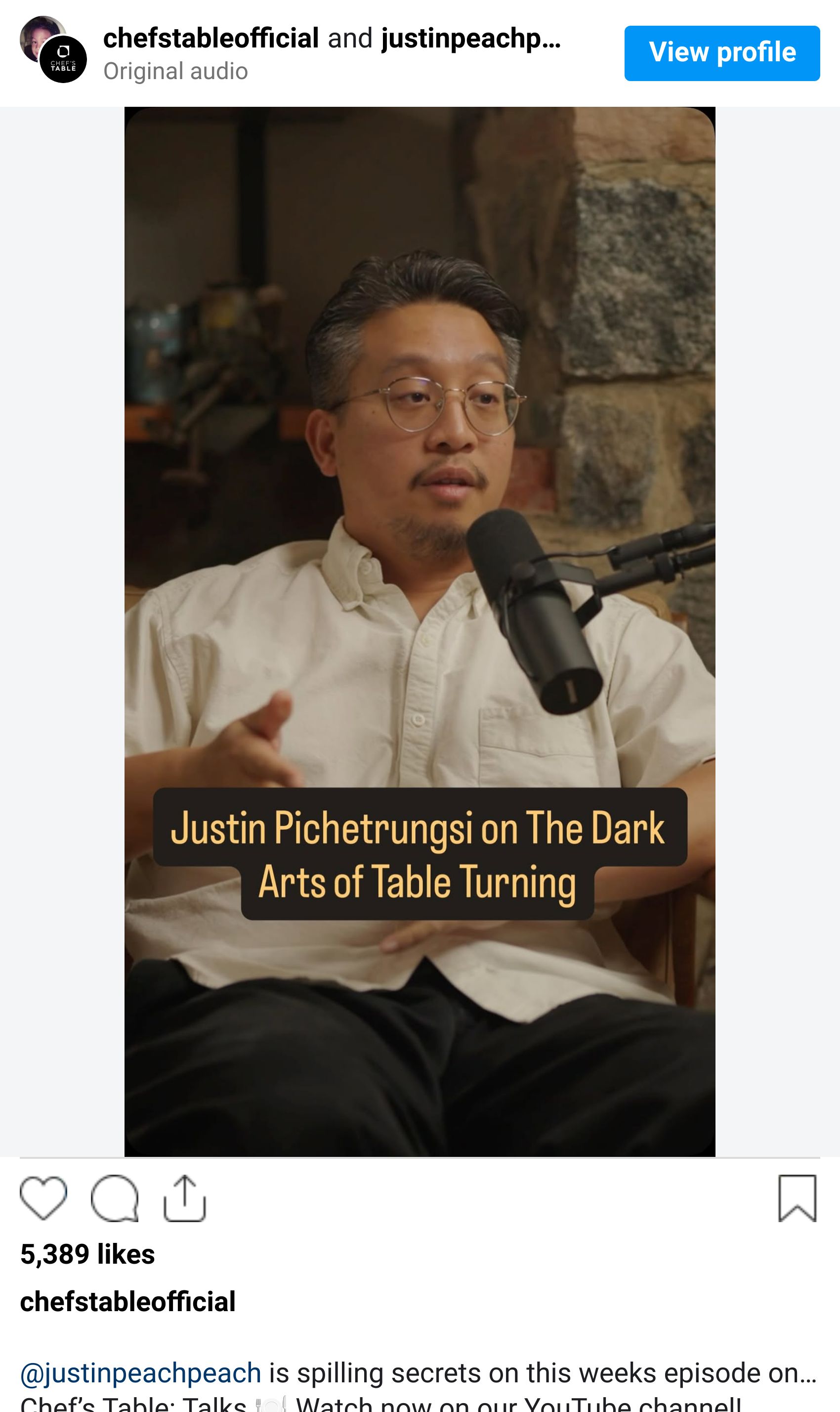
Justin Pichetrungsi, the chef and owner at LA’s Anajak Thai, discusses the dark arts of table turning on the Chef's Table podcast. Ahem. “What do you guys have planned for the rest of the evening?”
Bloomberg has a detailed look at OpenTable’s recent history under CEO Debby Soo, including how the reservation platform shifted from a consumer-centric product to a focus on paying customers (i.e., restaurants) and the company’s work toward making OpenTable more affordable for those paying customers. Anecdotally, the affordability message she’s promoting is working. Jimmy Stockwell, the restaurateur whose story is above, said he’s considering OpenTable as they’ve come down in price.
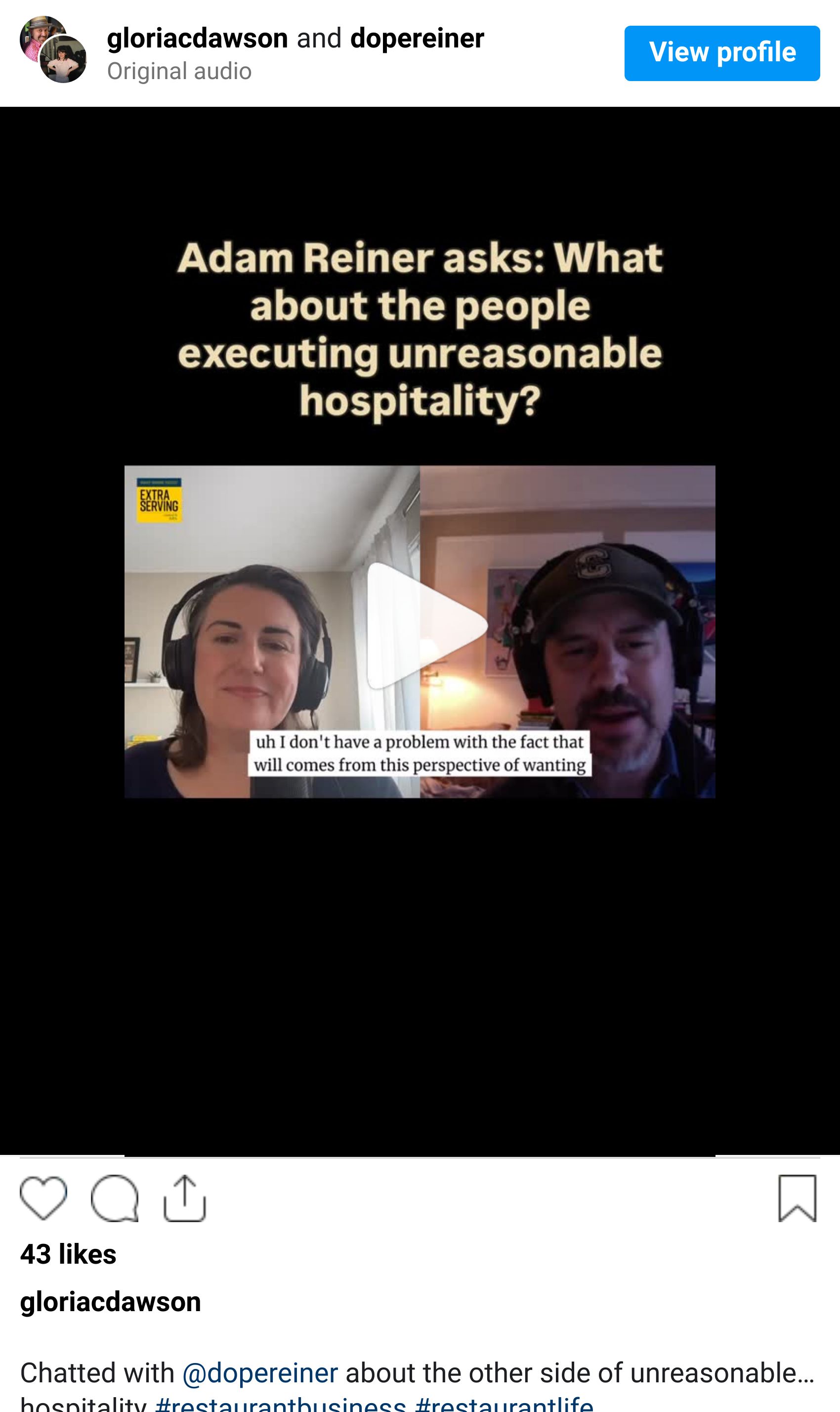
I spoke to fellow food writer Adam Reiner about the unreasonable side of unreasonable hospitality for Nation’s Restaurant News’ Extra Serving podcast. I’d argue that his book, The New Rules of Dining Out, should have a spot on the fine dining restaurant owners’ shelf along with Will Guidara’s Unreasonable Hospitality and Danny Meyer’s Setting the Table. His book helps balance out some of those huge expectations placed on restaurants. While the book offers tips to diners, he also stresses that a guest’s happiness is not the sole responsibility of the restaurant. Restaurants have enough to worry about.
The Buffalo, New York, tourism bureau declined to pay the $250,000 per year to join the Michelin Guide. The restaurant community there is now considering a “chicken or the egg paradox,” the Buffalo News reported. “Which comes first? Michelin eligibility or Michelin quality, which is easier for a restaurant in a working-class city to fund with the possibility of Michelin recognition?”
Thank you so much for reading In the Weeds.
If you enjoyed this newsletter, please forward it on to a friend in the industry.
In the Weeds wants your feedback. I’d love to hear from you.
—gloria