
Today's sponsor

Welcome to In the Weeds, a new publication covering the business of independent restaurants.
How do you help chefs grow in their careers when there’s no bigger job to move into? Larger restaurant groups can promote talent by shifting them to other concepts, but single-restaurant operations don’t have that option.
So you get creative. This summer, Fish Shop in Washington, DC, let its sous chefs take over for a night with a tasting menu they called the “Sous Supper.” They got a taste of both the creative and operational sides of running a dinner, all without leaving their own kitchen.
More on the Sous Supper below. Also in this edition: a look at the fine-dining flip, the latest on EIDL loans, and TikTok wants to be a restaurant discovery platform.
If this email was forwarded to you, you can subscribe here.
Putting a Spotlight on the Sous Chefs

Liv Bell at the Sous Supper
On July 30, Fish Shop in DC held a tasting dinner that felt a little bit different than its past events. The restaurant’s four sous chefs — Bobby Carter, Liv Bell, Khan Bataa, and Korie Greenfield — were each responsible for a dish they introduced during the meal.
Fish Shop’s executive chef, Ria Montes, told me the “Sous Supper” showcases her team.
“They’re very, very talented,” she said. “They’re very creative, and sous chefs are the unsung heroes of the kitchen. We wanted to put together a series that lets them be on their own and in the spotlight.”
The Sous Supper developed organically through conversations between Ria and her team. Ria embraces a collaborative process throughout menu development, and this was an extension of her management style.
“We go out of our way to make everyone feel valued,” she said. “I’m not one of those chefs where it’s like, okay, it’s time to do the fall menu, so I’ll just write this whole thing by myself. I really want it to be a group effort. I really want them to feel like they are a part of something and that they can claim Fish Shop for themselves as well.”
The Sous Supper encouraged creativity and gave them operational experience, said Liv, who has been at Fish Shop for a little over a year.
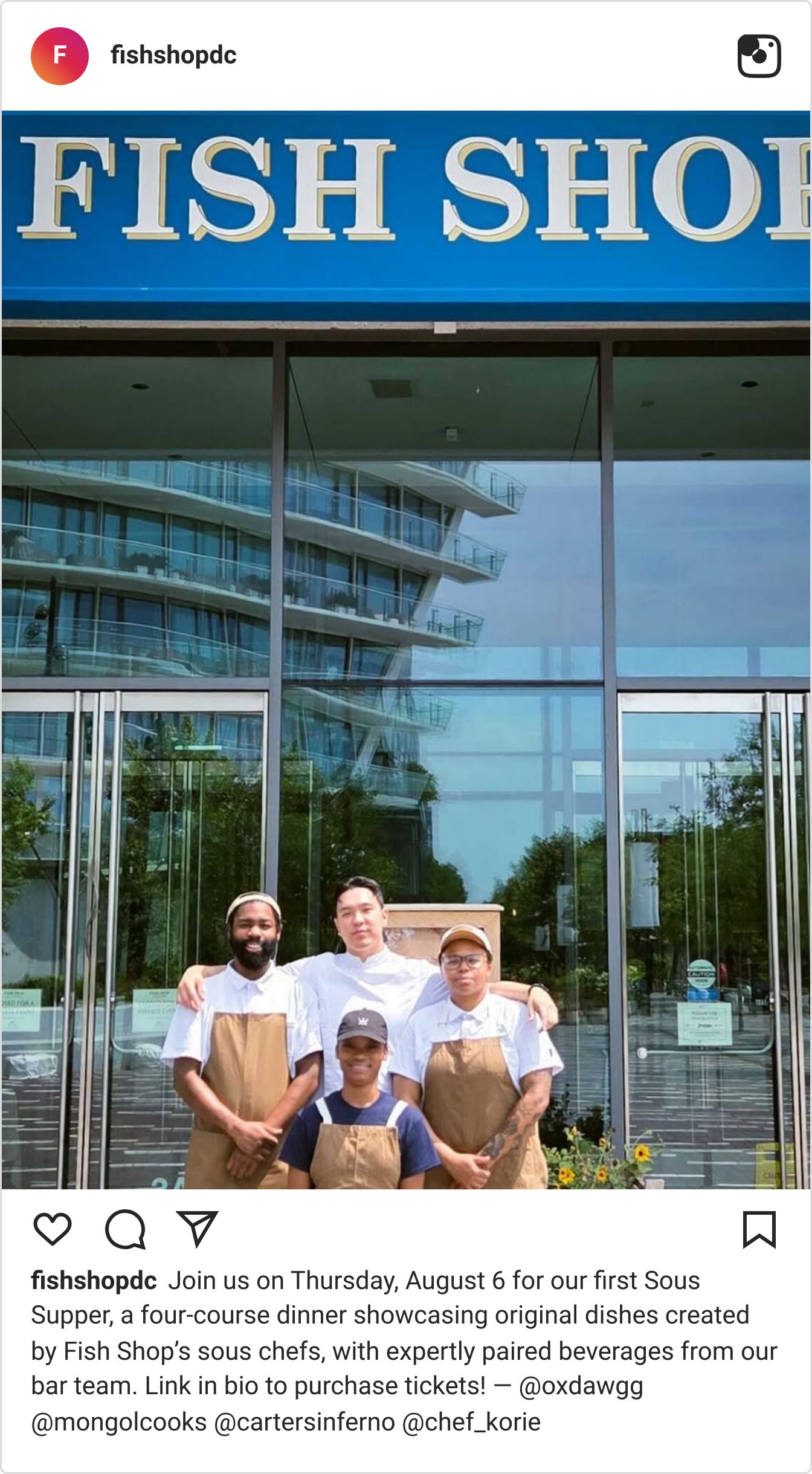
“We use these events not only as a way to allow people to flex their culinary muscles, but also as a way to understand what goes into this dish,” she said. “You know, doing your food costs, understanding how we get it from the purveyor to the creation phase, the production of it, to getting it in front of a guest, and everything that goes into putting together a dinner.”
While Liv has had opportunities for R&D throughout her career and is “always looking for an opportunity to get in front of people and talk about what I do,” other sous came to the dinner with different levels of experience and confidence when it came to discussing their menus. Running the Sous Supper without Ria’s oversight gave all four of them a chance to work together, play to their strengths and strengthen their weaknesses, Liv said.
“We all are in very, very different places in our lives — Michelin experience, fast casual experience, volume experience, and it was really cool to understand how all those different components can come together to do something successful.”
A Message from Today’s Sponsor
Restaurants can use newsletters to communicate directly with their diners, bypassing the unpredictability of the algorithm.
Stop feeding the feed.

You’ve put in the work to build an audience. But when the only way to reach your fans is through a social feed determined by algorithms, the platform decides who sees what you make next.
beehiiv gives you the tools to reach your audience directly. On their all-in-one platform, you can turn followers into subscribers, grow your newsletter, and connect it all to your community or podcast. Stop chasing virality on platforms you can’t control. Build a stronger, more sustainable business on beehiiv.
Side Dishes:
The Atlanta Journal-Constitution highlights the benefits of temporary restaurant closures. Closures like these are common in Europe, where taking a week or even a month off is the norm, but far less common in the United States. Still, more restaurants are building breaks into their business plans to help employees reset and stave off burnout. Many employees spend their time off patronizing restaurants and gaining inspiration. “I think it’s really important to enjoy yourself and also just take time to be a consumer on the other side,” Rachael Pack, the sommelier and partner at Atlanta’s So. Fox, said.
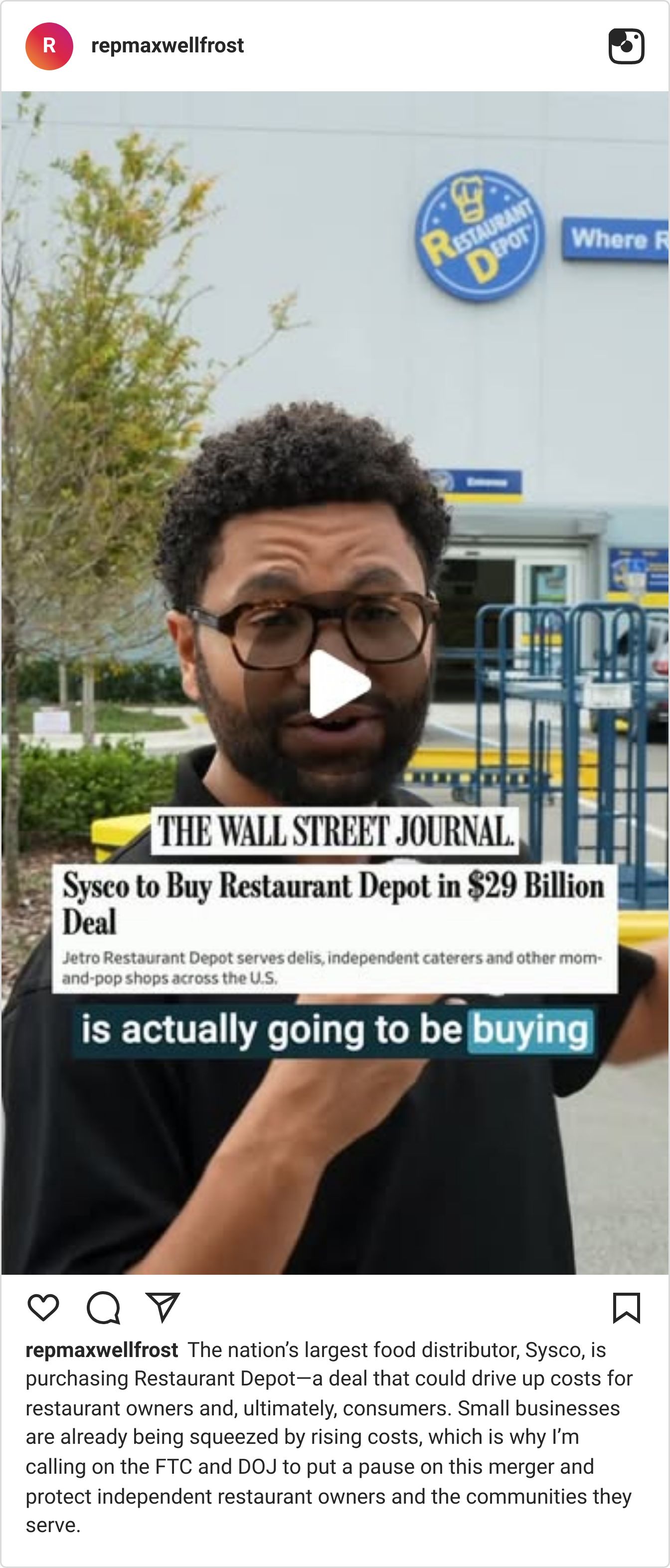
Sysco’s standoff with restaurants and their advocates continues. More politicians are taking a stand against the proposed merger and framing it as one that’ll cost diners.
Over on Eater, Bettina Makalintal looks at the “fine dining flip.” High-end spots like Chateau Royale, which opened in New York City last year, reopened in August as Floradora, a more casual neighborhood restaurant. “At a certain point, the world around both [restaurants] began to change,” co-owner Cody Pruit said. (Floradora is the second restaurant his group has “flipped.”) “We were increasingly conscious of what a restaurant costs people and how often they could use it.” Restaurants like Floradora have overhauled their menus to welcome more dining occasions in the new economic reality, while spots like Rye Bunny in DC have switched to a counter-service model to make the math work.
Defaults on economic injury disaster loans (EIDL) have steadily risen to over 30% as restaurants and other businesses that received these loans during the pandemic continue to face hardships. As one Florida restaurant owner told the Guardian, “Rents are very high. The average population doesn’t have spending power. There is a lack of qualified labor. Tourism has also declined here. Everyone is just nervous about when the next leg of the stool is going to collapse.”
I wrote about how diners are using seafood towers for Nation’s Restaurant News. Today, diners are more likely to order the tower as a main dish, whether for price, health, or other reasons.
For Nation’s Restaurant News, I also wrote about dry-aged fish, which is growing in popularity but seems limited for now, in part, because of its branding. Even Liwei Liao, founder and owner of Joint Seafood in Los Angeles, and the self-appointed “dry-aged fish guy,” agrees. “The first two words of that are something that people usually don’t want to associate fish with, right? You don’t want dry fish or aged fish,” he told me.
I’ve been reluctant to go all in on TikTok. Restaurants, don’t follow my lead. Insight Out by Carbonate notes that the platform is quickly becoming a local discovery engine, particularly with the “lunch in my city” trend. Essentially, users delegate their dining decisions to the algorithm by searching “lunch in my city,” clicking the first video that appears, and trying the restaurant. Restaurants should use specific, local keywords in TikTok captions and include their location to help the algorithm surface their posts.
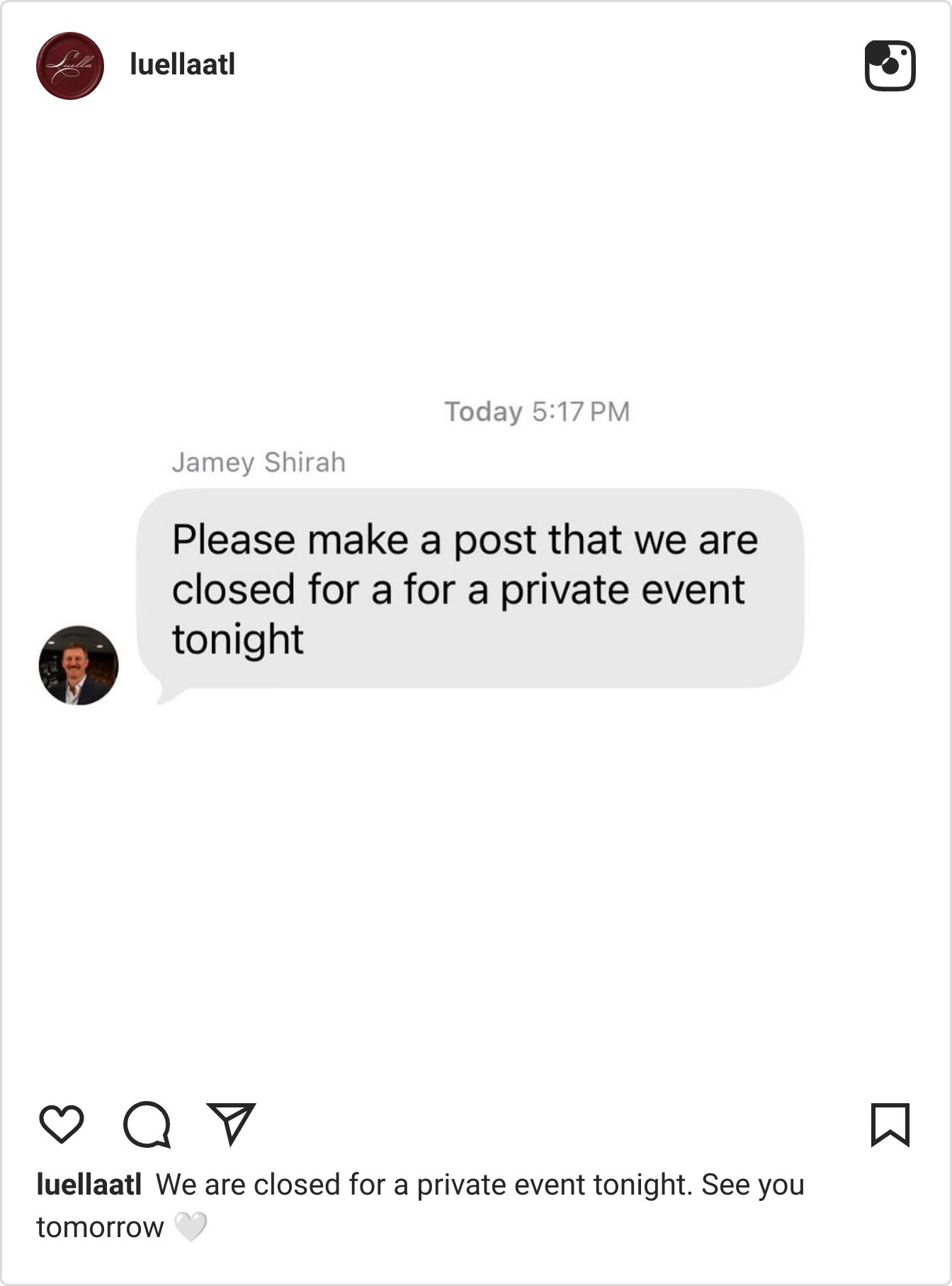
And a reminder not to overthink social media posts. This one has 165K likes somehow.
Thank you so much for reading In the Weeds.
If you enjoyed this newsletter, please forward it on to a friend in the industry.
In the Weeds wants your feedback. I’d love to hear from you.
—gloria