
Welcome to In the Weeds, a new publication covering the business of independent restaurants.
I spent Saturday through Monday bouncing around Chicago and hitting the Utility and the National Restaurant Association shows, which could not be more different in terms of size and vibe. (While the NRA had a pickleball court, the Utility show had a tattoo parlor.) But there were some common themes between Utility, the upstart show that launched in 2024, and the more established NRA show, which launched in 1919. AI, immigration, and the feeling that we’re still reeling from the pandemic came up a lot.
In this issue, I’m changing the usual newsletter style to highlight a few themes and voices from the show. If you attended one (or both) and have thoughts to share, please do!
If this email was forwarded to you, you can subscribe here.
Will Restaurants Take the Call?
Over the long weekend, I spent more time on rotary phones than ever before. At the shows, companies used these old-school phones as a gimmick to let attendees interact with AI-powered call-answering solutions.
The technology has been around for a few years. But it’s reached a fever pitch. At Utility, OpenTable’s section included a demo rotary phone showing off PolyAI, one of a dozen voice AI solutions the platform works with. At the NRA show, I counted 13 companies that specialized in voice AI phone answering or had rolled out a feature that included that service.
The PolyAI conversation at Utility was a prerecorded interaction; at the NRA show, a Hoostie rep from that AI-powered call-answering company handled the call while demonstrating how the agent translated the conversation. Also at NRA, SlangAI let me make a reservation for seven people and told me how much it would cost to bring my own cake to the imaginary restaurant.
Jen Hwang, VP of revenue at Slang, noted that the company integrates with Tripleseat, the private events management company that had a booth next to Slang’s. Jen highlighted that Slang’s agent can help identify in-between reservations that are maybe too big to make on a traditional platform like OpenTable or Resy but too small for Tripleseat.
Each of these companies and services has some unique features, but, overall, they assist restaurants by answering calls during peak times or when the restaurant is closed. Most services include the ability to make and adjust reservations, answer basic diner inquiries, and take to-go orders.
Deciding which company to work with might come down to which one integrates with the tech a restaurant already uses. I imagine at least a few of the integration announcements I saw this year will become acquisition announcements in the next year or so.
So, does every restaurant need AI-powered call answering? No, but I do think this sort of service will be expected as diners become more accustomed to interacting with these agents.
And I think AI-powered phone calls are among the least controversial uses of AI. As a bonus, when they work as anticipated, these agents support both restaurants and diners. Diners can get timely answers to their questions; restaurants don’t need to staff a host stand during off hours or keep an employee on the phone to take a to-go order during a rush.
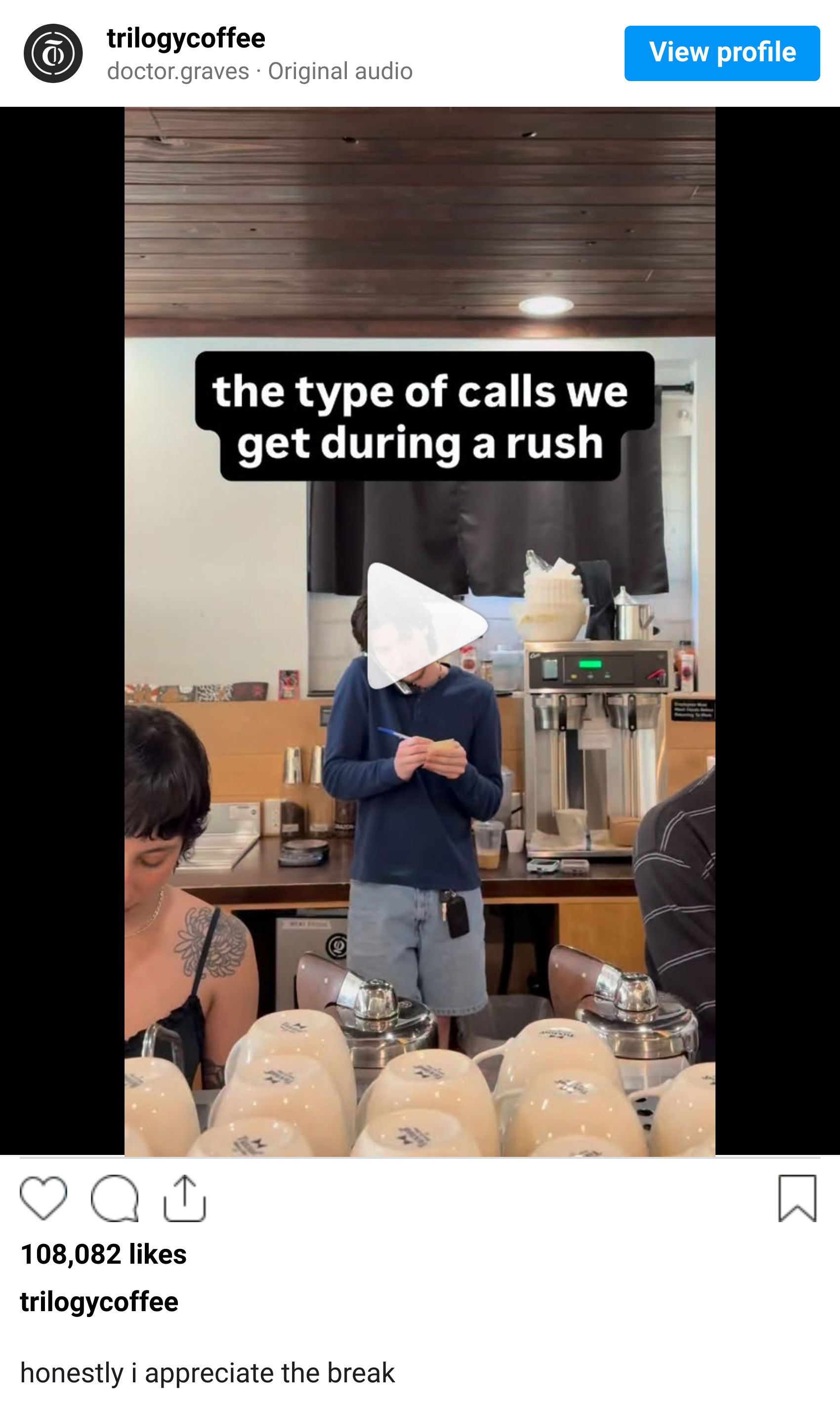
I joked with Cliff Cate, the GM of Yelp for Restaurants, that Yelp Host, the company’s AI phone answering product, could free restaurant staff from chatty to-go customers. Yelp’s AI agent will “talk as long as you want,” he said
This Order Is Being Recorded
I spoke to a lot of voice AI agents over the long weekend, and I handled a lot of handheld POSs. After a long day at the shows, I was discussing these trends with a colleague on Sunday, and we started wondering when we would see the two trends merge. A handheld POS that can listen to orders would allow servers to focus on diners while taking an order rather than fiddling with the device.
I’m not saying Global Payments was listening in on that conversation, but I got a message a few hours later from the company regarding their handheld POS device with AI-powered voice-ordering technology. I met with Chris Siefken, president of restaurant POS at Global Payments, a payment tech company, the next day. He explained that he tested the handheld, which has six microphones rather than the three or so in iPhones, in the “loudest, most difficult places I could find.”
Chris demonstrated how a server would hold the device at his side while taking an order. The server would take a run-through of the order the agent had entered and ask diners any follow-ups the POS indicated, like upsells.
It’s very early days for this technology, but I am excited about what it might mean for hospitality, while nervous about the implications of recording diners. Chris, for his part, felt that the “magic” of the tech would help override any concerns about being recorded. He also noted that the recordings are only stored locally.
Later that day, when my colleague and I were out for dinner at the Publican, I saw our server use a notepad to take our order, then move to another area to enter it into her Toast handheld. In the future, could her handheld record the order for her? And what’s stopping a company like Toast from waiting to see how restaurants and diners adapt to AI-powered voice-ordering technology and creating a product for themselves?
A Few Human Voices from the Restaurant Shows
Or proof that I didn’t just chat with AI agents all weekend.

The Independent Restaurant Coalition panel at Utility
“I would argue [it’s] one of the fundamentally core issues that we should be grappling with, and everyone is afraid to say the word immigration. I don't understand. I live in a red state, right? If you want to be afraid to say immigration, live in Texas.”
Emily Williams Knight, President & CEO at Texas Restaurant Association, at an immigration-focused panel at the NRA show.
(More on the panel from Nation’s Restaurant News)
The important thing to really talk about is this notion that chefs, for some strange reason, really want to own spaces but not fully grasp how the business works. And what really took the hit during the pandemic is there was a shakeout on who could operate and who couldn’t, who had access to funds and who didn’t. I don’t think there would be a big argument on whether or not chains understand at a high level how to operate. We might argue how good the food is, but we would not argue whether or not they’re great at leasing space, they’re great at identifying space, they’re great at operations on a day-to-day basis.
Erick Williams of Virtue restaurant in Chicago, during a panel discussion on the benefits of the Independent Restaurant Coalition at the Utility show.

Square was everywhere.
SpotOn sponsored both panels and was one of two companies I spotted at both shows. The other was Square. It’s the second year SpotOn has had a presence at both shows, they told me.
“SpotOn’s focus is showing up for restaurant owners wherever they are,” said Kevin Bryla, Chief Marketing Officer at SpotOn. “While the National Restaurant Association Show and Utility are different events, they both put operators front and center, and that’s where we want to be.”
Thank you so much for reading In the Weeds.
If you enjoyed this newsletter, please forward it on to a friend in the industry.
In the Weeds wants your feedback. I’d love to hear from you.
—gloria